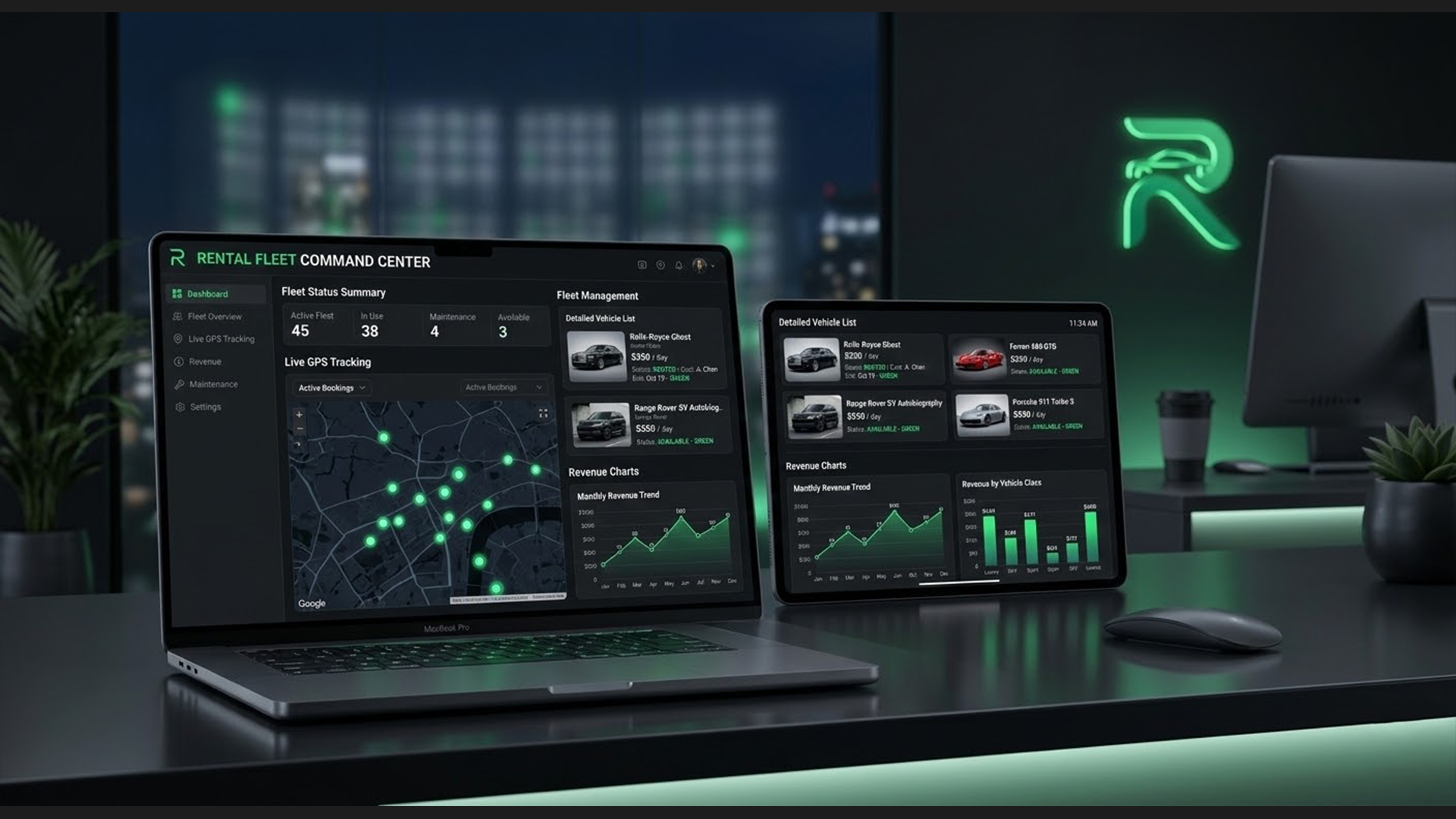
Planning to launch or upgrade a car rental business? Discover the essential features, UI/UX strategies, and advanced tech stacks (Next.js, React, WordPress) needed to build a high-converting car rental website in 2026.
The car rental industry is undergoing a massive digital transformation. Long gone are the days when customers would stand in line at an airport kiosk filling out paper forms. In 2026, the modern consumer demands instant gratification, absolute transparency, and a frictionless digital experience. Whether you are running a localized luxury car boutique or building the next global peer-to-peer (P2P) car-sharing platform like Turo, your website is the definitive face of your business.
If your platform is sluggish, confusing, or lacks real-time inventory synchronization, potential renters will simply close the tab and book with your competitor.
Building a robust car rental website is significantly more complex than a standard e-commerce store. You are not just selling a static product; you are selling time, managing complex liability, and tracking expensive moving assets. In this comprehensive guide, we will dissect the essential architecture, front-end features, and backend fleet management systems required to build a market-dominating car rental website.
Chapter 1: The Psychology of the Modern Renter
Before diving into the code and database architecture, we must understand how the modern user interacts with a rental platform. The user journey of renting a vehicle is fundamentally different from buying a pair of shoes online.
Renting a car is a high-anxiety transaction. Users are worried about hidden insurance fees, unfair damage claims, and the vehicle not being available upon arrival. Your website’s primary job is to systematically eliminate these anxieties through strategic UI/UX design and transparent communication.
-
The “Date-First” Rule: A common mistake in standard e-commerce adapted for rentals is showing the user a catalog of cars before asking for their dates. A user finds the perfect SUV, clicks “Book,” only to discover it’s unavailable for their weekend trip. This causes immense frustration. A high-converting site always asks for the Pick-up/Drop-off dates and location first, ensuring the user only sees 100% available inventory.
-
Trust Through Transparency: The checkout process must clearly delineate the base daily rate, taxes, mandatory insurance, optional add-ons, and the exact security deposit required. Hidden fees at the final step are the leading cause of cart abandonment in the rental sector.
Chapter 2: Essential Front-End Features for High Conversion
The front-end of your application is where the battle for the customer’s wallet is won or lost. Utilizing modern frameworks like React.js and Next.js, or a highly optimized WordPress/Elementor setup, we can engineer an interface that feels less like a website and more like a premium native app.
1. Advanced Search and Dynamic Filtering
Once the dates are inputted, the search results must be delivered instantly. Slow load times during search queries are conversion killers.
-
Instant Filtering: Users should be able to filter the fleet by transmission type (Automatic/Manual), fuel type (EV, Hybrid, Gas), seating capacity, and brand without the page reloading.
-
Interactive Map Integration: For businesses with multiple pickup locations or P2P platforms, integrating the Google Maps or Mapbox API allows users to visually search for cars in their immediate vicinity.
2. Immersive Vehicle Presentation
Your digital showroom needs to compensate for the inability to test drive the car.
-
360-Degree Views: Integrating interactive 360-degree exterior and interior views drastically increases user confidence.
-
High-Fidelity Media: Serve compressed, next-generation image formats (WebP) to ensure high-resolution photos load instantly on mobile networks.
-
Clear Specifications: Visually appealing icon grids highlighting key features (Bluetooth, Apple CarPlay, Cargo Space, MPG).
3. Frictionless Mobile-First Booking
Over 70% of car rental searches originate on mobile devices. The booking flow must be ruthlessly optimized for thumbs.
-
Sticky Booking Bars: As the user scrolls through the car’s features, the pricing and “Book Now” button should remain locked to the bottom of the screen.
-
Guest Checkout: Never force a user to create a permanent account just to complete a reservation. Provide a streamlined guest checkout option, allowing them to save their details later.
Chapter 3: The Engine Room—Backend Fleet Management System
A beautiful front-end is useless if the backend cannot handle the complex logistical realities of a car rental business. A custom-built platform provides the control necessary to automate daily operations.
1. Real-Time Inventory & The “Race Condition”
If two users are looking at the same limited-edition Porsche for the same weekend, the system must handle the transaction flawlessly to prevent double-booking. This requires sophisticated database locking mechanisms. Once User A initiates the checkout process, the dates for that specific vehicle must be temporarily “locked” for 10 minutes. If they don’t complete the purchase, the dates are released back into the available pool.
2. Intelligent Buffer Times (Turnover Logic)
Cars cannot be rented back-to-back down to the minute. A robust backend automatically calculates and inserts “Buffer Times.” If a car is dropped off at 10:00 AM, the system should automatically block it from being rented again until 2:00 PM, allowing your team time for inspection, cleaning, and refueling.
3. Dynamic Pricing Algorithms
Static pricing leaves money on the table. Your platform needs a rule-based pricing engine:
-
Weekend Surges: Automatically increase daily rates by 15% from Friday to Sunday.
-
Duration Discounts: Encourage longer rentals by automatically applying a 10% discount for bookings exceeding 7 days.
-
Utilization-Based Pricing: If 80% of your compact cars are booked for a specific week, the system should automatically raise the price of the remaining 20%.
Chapter 4: Security, Liability, and Payment Gateways
Handling expensive assets requires an ironclad approach to user verification and payment processing.
1. Digital Identity Verification
Before handing over the keys to a $50,000 asset, you need to know exactly who the renter is. Modern platforms integrate tools like Stripe Identity or Onfido. These APIs allow users to snap a photo of their driver’s license and a real-time selfie. The AI instantly cross-references the faces and verifies the document’s authenticity against global databases, drastically reducing the risk of fraud and theft.
2. Complex Payment Routing and Pre-Authorizations
Car rentals require a unique payment flow. You aren’t just charging a flat fee; you need to handle security deposits.
-
Pre-Authorization (Holds): Instead of actually charging the user a $500 deposit (which takes days to refund), the system should place a “Hold” on their credit card. This freezes the funds during the rental period and automatically releases them 48 hours after a safe return.
-
Split Payments (For P2P): If you are running a multi-vendor platform, integrating Stripe Connect allows the system to automatically split the transaction—sending 80% to the car owner and keeping 20% as your platform commission.
3. Automated Digital Contracts
Paperwork slows down the dispatch process. Your website should automatically generate a PDF rental agreement populated with the user’s data, the car’s VIN, and the exact dates. Integrating an e-signature API allows the user to legally sign the contract digitally before they even arrive at the lot.
Chapter 5: Tech Stack Selection—Finding Your Perfect Fit
The foundation of your platform dictates its future scalability. There is no one-size-fits-all answer; the right technology depends on your business model and budget.
The Enterprise Approach: Headless Commerce (Next.js & React)
If you are building a highly scalable, multi-location platform or a P2P marketplace, a headless architecture is the gold standard. By separating the front-end (built with React/Next.js) from the backend API (Node.js/Express or a headless CMS), you achieve:
-
Unmatched Speed: Next.js utilizes Server-Side Rendering (SSR) and Static Site Generation (SSG), serving pages in milliseconds.
-
App-Like Feel: Fluid page transitions without browser reloads.
-
Ultimate Flexibility: You are not restricted by the limitations of pre-built themes. Every micro-interaction can be custom-coded using libraries like GSAP and Tailwind CSS.
The Agile Approach: Custom WordPress & WooCommerce
For local, single-location car rental businesses managing a fleet of under 100 vehicles, WordPress remains an incredibly powerful and cost-effective solution. By leveraging custom-developed WooCommerce extensions and professional page builders (like Elementor or Divi), a skilled developer can create a highly customized, easy-to-manage platform.
-
Client Autonomy: Your staff can easily add new vehicles, change prices, and publish blog posts without needing to know how to code.
-
SEO Advantages: WordPress natively structures data well for search engines, and with the right optimization plugins, dominating local search results is highly achievable.
Chapter 6: The SEO Architecture for Car Rentals
A perfectly coded website is useless if no one can find it. The rental industry is fiercely competitive on Google, meaning your site architecture must be engineered for SEO from day one.
-
Programmatic Landing Pages: If you operate in multiple cities, your site should dynamically generate optimized landing pages (e.g., “Luxury Car Rental in Miami”, “SUV Rental in Orlando”).
-
Schema Markup: Implementing deep structured data (Vehicle Schema, Local Business Schema, and Aggregate Rating Schema) allows Google to display your car pricing and review stars directly in the search results, dramatically increasing Click-Through Rates (CTR).
-
Core Web Vitals: Google heavily penalizes slow websites. Whether using Next.js or an optimized WordPress stack, achieving a 90+ score on Google PageSpeed Insights is mandatory for top-tier rankings.
Conclusion: Driving Your Business Forward
Transitioning from a traditional car rental operation to a modern, digital-first powerhouse requires strategic investment. Your website is no longer just a digital brochure; it is your booking agent, your risk management officer, and your primary marketing channel wrapped into one.
Building a platform that seamlessly integrates real-time inventory locking, dynamic pricing, robust identity verification, and a flawless mobile user experience is a complex engineering challenge. However, when executed correctly, it transforms your business from a manual, labor-intensive operation into a highly scalable, automated revenue-generating machine.
Whether you need the rapid deployment and content flexibility of a custom WordPress architecture or the bleeding-edge performance of a headless Next.js application, choosing the right development partner is the first step toward dominating your local or global market.