In the world of standard e-commerce, the primary goal is often volume: getting as many users as possible to click “Add to Cart” as quickly as possible. But when you transition into the luxury market—selling high-ticket fashion, exclusive jewelry, or premium Korean hand care products to elite demographics in hubs like Dubai or London—the rules of the game change entirely.
Luxury consumers do not just buy a product; they buy an experience, a status, and a story. If your digital storefront feels cheap, sluggish, or generic, the perceived value of your premium product instantly plummets.
As a web developer specializing in high-performance digital architectures (utilizing React, Next.js, and highly customized Shopify/WordPress builds), I have seen firsthand how digital presentation directly dictates pricing power. In this guide, we will explore the critical design philosophies and technical strategies required to build an e-commerce website that exudes exclusivity and converts high-net-worth individuals.
1. The Psychology of Dark UI and Negative Space
When designing for luxury, less is almost always more. You are not trying to shout at the customer with flashing sale banners or cluttered product grids. You are inviting them into an exclusive gallery.
-
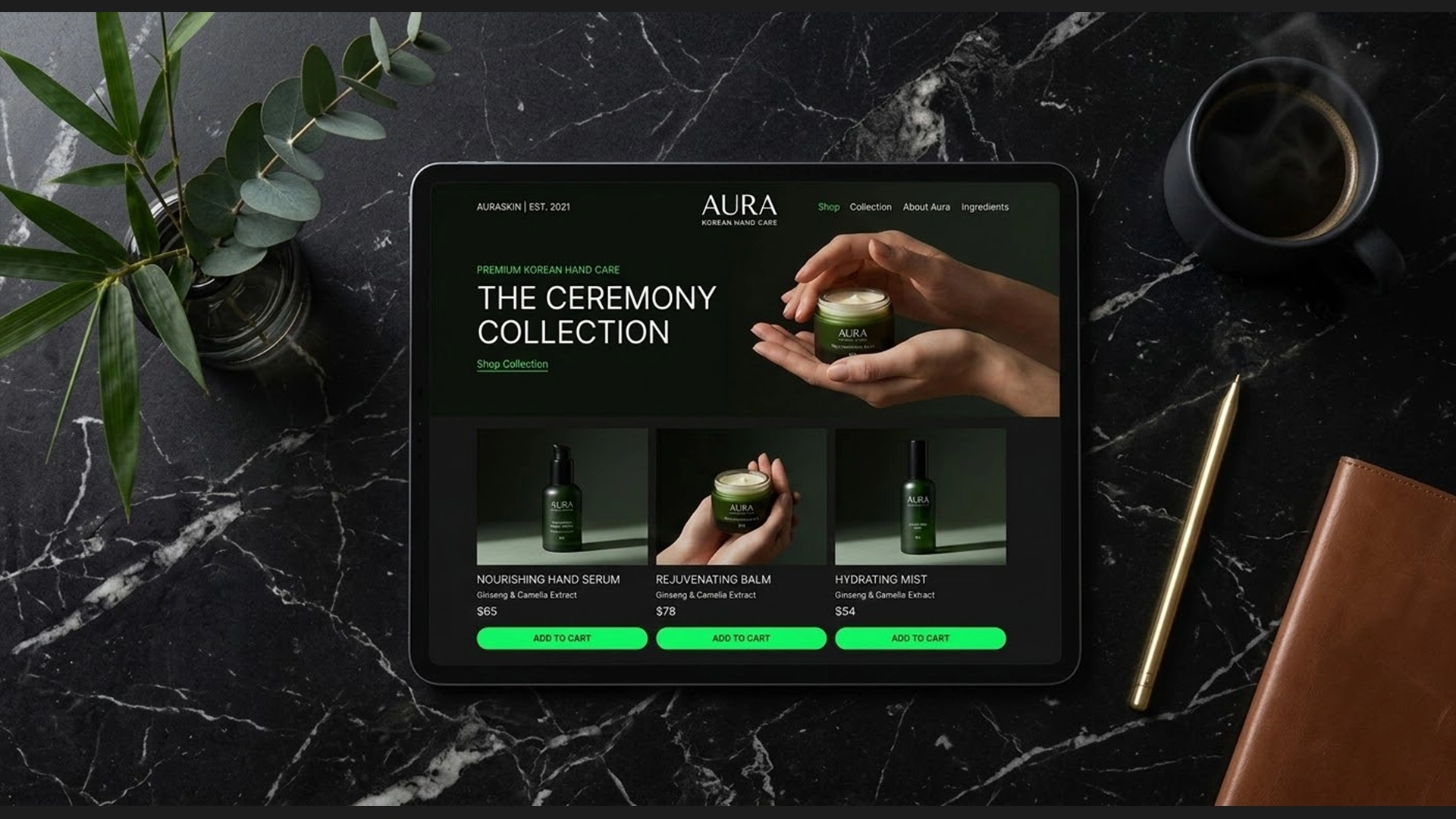
The Power of Dark Mode: While white backgrounds are standard, utilizing a meticulously crafted dark background (deep charcoals or absolute blacks) immediately signals sophistication and premium quality. It allows high-resolution product photography to pop off the screen.
-
Strategic Accent Colors: In a dark-themed luxury site, your primary brand color should be used sparingly. A vibrant, electric highlight color—like a sharp, neon-inspired green—used exclusively for primary call-to-action (CTA) buttons creates a stunning visual hierarchy that guides the user’s eye without overwhelming them.
-
Aggressive Negative Space: Give your products room to breathe. Massive amounts of negative space convey that your brand is confident and not desperate for attention.
2. Typography as a Status Symbol
In luxury web design, typography does an incredible amount of heavy lifting. Generic fonts instantly cheapen the brand experience.
To communicate modern elegance and flawless readability, you must rely on premium geometric sans-serif typefaces. Fonts like Sora or Inter are absolute powerhouses in this space. They offer a clean, architectural structure that feels incredibly modern and high-tech, yet timeless enough for a luxury skincare or fashion brand.
-
Hierarchy: Use large, bold, and tightly tracked headings to make powerful brand statements, paired with lighter, highly legible paragraph text for product descriptions.
3. Visual Storytelling and Immersive Merchandising
A luxury consumer needs to feel the texture of the product through their screen. Standard, static images on a white background are insufficient.
-
Macro Photography and Video: If you are launching a premium hand care brand targeting the Dubai luxury market, your website must feature ultra-high-definition, slow-motion video headers showing the texture of the cream, the elegant unboxing experience, and the premium lifestyle associated with the brand.
-
Scroll-Triggered Animations: Utilizing advanced JavaScript animation libraries (like GSAP or Framer Motion), developers can create immersive, “scrollytelling” experiences. As the user scrolls down the page, elements should fade in smoothly, products should rotate in 3D, and the brand’s heritage story should unfold naturally.
4. Uncompromising Technical Performance (Next.js Architecture)
High-net-worth individuals value their time above all else. A beautifully designed luxury website that takes 6 seconds to load is a failed website.
To achieve the “instantaneous” feel of a native luxury app, traditional monolithic architectures often fall short. This is where a Headless Commerce approach utilizing Next.js and React becomes the gold standard.
-
Zero-Latency Transitions: By decoupling the frontend from the backend (like Shopify Plus), you can serve pages via edge networks. When a user clicks from the homepage to a product page, there is no loading spinner. The transition is instant and fluid.
-
Flawless Mobile Experience: Over 75% of luxury purchases now involve a mobile device at some point in the customer journey. A Next.js architecture ensures that the mobile experience is just as blazing-fast and immersive as the desktop version.
5. The “White-Glove” Checkout Experience
The checkout process on a luxury website must feel like being assisted by a private concierge, not like filling out a tax form.
-
Eliminate Clutter: Remove all navigation links and distractions from the checkout page. The focus must be entirely on finalizing the transaction.
-
Concierge Support: Integrate a high-end, discreet live chat feature right on the checkout page. If a customer is about to drop $1,000 on a luxury item, they might have a quick question about shipping times to the Middle East. Real-time, human support seals the deal.
-
Premium Packaging Options: Offer complimentary luxury gift wrapping or personalized, handwritten notes directly within the checkout flow. This reinforces the premium nature of the purchase.
Conclusion: Your Website is Your Flagship Store
For a modern luxury brand, your e-commerce website is your global flagship store on the most expensive digital real estate in the world. It must be engineered with the same meticulous attention to detail as a physical boutique in Paris or Dubai.
Building this level of digital exclusivity requires a perfect synthesis of elite UI/UX design, modern typography, and bleeding-edge technical performance.