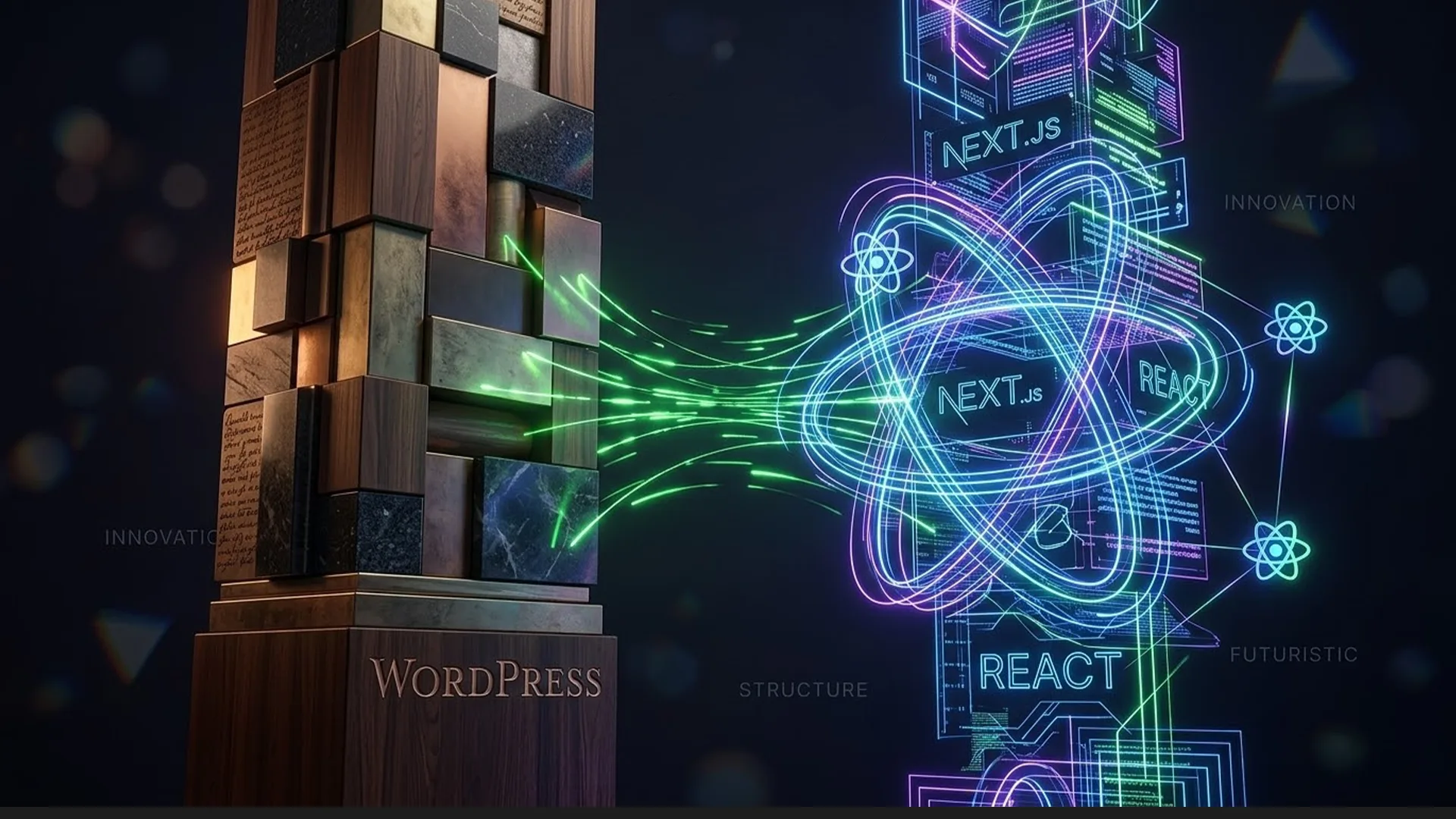
Are you building a rental marketplace? Compare the ultimate showdown between traditional WordPress (WooCommerce) and modern Headless React (Next.js) to discover the perfect, scalable tech stack for your rental business.
When entrepreneurs and business owners decide to build a rental marketplace—whether it is a localized luxury car rental service, a peer-to-peer (P2P) camera sharing platform, or a global vacation property site—they inevitably face the most critical technical decision of their journey: Which technology stack should power the platform?
The digital landscape in 2026 is unforgiving. Users demand instantaneous search results, fluid mobile interfaces, and impenetrable security. Choose the right architecture, and your platform can scale effortlessly to handle thousands of concurrent bookings. Choose the wrong one, and you will find yourself trapped in a slow, buggy, and expensive digital nightmare that drives customers straight to your competitors.
For over 7 years, I have engineered premium digital experiences across a multitude of platforms. I have pushed WordPress to its absolute limits and architected lightning-fast headless applications using Next.js and React. In this comprehensive technical breakdown, we will strip away the marketing jargon and objectively analyze the two dominant approaches to building a rental website: The Traditional Monolith (WordPress) vs. The Modern Headless Approach (Custom React/Next.js).
Chapter 1: The Heavyweight Champion — WordPress & WooCommerce
WordPress powers over 40% of the entire internet. It is a monolithic architecture, meaning the backend (database, content management) and the frontend (what the user sees) are tightly coupled together. For rentals, this usually involves pairing WordPress with WooCommerce and a dedicated booking plugin.
The Advantages of WordPress for Rentals
1. Unmatched Speed to Market
If you need to launch a Minimum Viable Product (MVP) quickly to test a market concept, WordPress is unparalleled. With a massive ecosystem of pre-built themes and powerful page builders, a skilled developer can assemble a fully functional, beautiful rental site in a matter of weeks, rather than months.
2. Cost-Effective Initial Development
Because developers do not have to reinvent the wheel for every single feature (like user login, basic cart functionality, or payment gateway routing), the initial development cost of a WordPress site is generally lower than a fully custom React build.
3. Client Autonomy and Content Management
This is arguably WordPress’s greatest strength. Once the site is handed over, your internal marketing team can easily publish blog posts, tweak SEO metadata, add new rental inventory, and adjust pricing without needing to write or understand a single line of code.
The Dark Side of WordPress (The Limitations)
1. The “Plugin Soup” Dilemma
To achieve complex rental functionalities (multi-vendor dashboards, security deposits, dynamic seasonal pricing, calendar syncing), developers often have to chain together 10 to 15 different premium plugins. This creates a fragile ecosystem. When WordPress core updates, or one plugin conflicts with another, the entire booking system can crash.
2. Performance Bottlenecks at Scale
As your database grows—logging thousands of past bookings, user profiles, and complex availability calendars—traditional WordPress can become sluggish. If 500 people are simultaneously searching for a rental car on a Friday night, a standard WordPress setup might struggle with the database queries, resulting in dreaded loading spinners.
3. Frontend Rigidity
While tools like Tailwind CSS can be integrated into custom WordPress themes for modern styling, the monolithic nature of the platform means every page load requires a trip to the server. You cannot easily achieve the ultra-smooth, app-like page transitions found in modern web apps without heavy, complex AJAX workarounds.
Chapter 2: The Futuristic Challenger — Custom React (Next.js)
React.js (a JavaScript library created by Facebook) combined with the Next.js framework (by Vercel) represents the cutting edge of modern web development. This is a “Headless” approach. The frontend user interface is completely separated from the backend database and logic via APIs.
The Advantages of Next.js for Rentals
1. Blazing Fast, App-Like Performance
Next.js utilizes Server-Side Rendering (SSR) and Static Site Generation (SSG). This means the server pre-builds the HTML and serves it instantly to the user via a global CDN. When a user clicks from the homepage to a car listing, the page doesn’t reload; it transitions instantly, just like a native iOS or Android application. This lack of friction dramatically increases conversion rates.
2. Infinite Customization and Micro-Interactions
When you build from scratch with React, you are not fighting against a pre-built theme’s code. You have absolute granular control over every pixel. You can integrate advanced animation libraries like GSAP or Framer Motion to create a premium, immersive user experience. Want a specific, highly complex multi-step checkout accordion? You build exactly what the business logic dictates.
3. Effortless Scalability
If your platform goes viral and traffic spikes by 10,000% overnight, a decoupled Next.js frontend hosted on edge networks (like Vercel) will not crash. The architecture is inherently designed to handle massive enterprise-level traffic without breaking a sweat.
The Challenges of the Next.js Approach
1. Higher Initial Investment
Building a custom Next.js application requires writing complex custom logic for features that WordPress gives you out of the box (like user authentication sessions, cart state management, and basic CRUD operations). This requires more development hours, making the initial investment significantly higher.
2. Ongoing Technical Reliance
Unless you build a sophisticated custom admin dashboard (which adds to the cost) or integrate a user-friendly Headless CMS, your marketing team might find it slightly more difficult to manage day-to-day content updates compared to the familiar WordPress dashboard. You will likely need an ongoing relationship with a developer for technical maintenance and feature additions.
Chapter 3: The Rental-Specific Showdown
Let’s look at how these two architectures handle the specific, complex requirements of a rental marketplace.
1. The Real-Time Booking Engine & Race Conditions
The Scenario: Two users try to book the exact same beachfront villa for the exact same weekend at the exact same time.
-
WordPress: Relying on third-party booking plugins means you are trusting their specific database locking mechanisms. Some handle this well; others fail, resulting in a disastrous double-booking that you have to manually resolve.
-
Next.js: A custom backend allows your developer to write precise, atomic database transactions. You can implement a rigid “10-minute hold” system the millisecond a user clicks “Checkout,” guaranteeing that double-bookings are mathematically impossible.
2. Advanced Search and Dynamic Filtering
The Scenario: A user wants to filter 500 cars by “Automatic,” “Electric,” “Under $100/day,” and “Available Next Tuesday.”
-
WordPress: Each time a filter is clicked, the page typically has to reload, sending a heavy query to the SQL database. This can take 2-4 seconds per click.
-
Next.js: React manages “state” flawlessly. The inventory can be filtered on the client side almost instantly without refreshing the page. The user sees the car list shrink and expand in real-time as they toggle filters.
3. SEO (Search Engine Optimization)
The Scenario: You need your rental listings to rank #1 on Google for local searches.
-
WordPress: Historically the king of SEO. Plugins like RankMath or Yoast make optimizing metadata incredibly easy for non-technical users.
-
Next.js: Thanks to Server-Side Rendering (SSR), Next.js is equally powerful for SEO. Google’s crawlers can read the fully rendered HTML instantly. Furthermore, because Next.js sites generally achieve much higher Core Web Vitals scores (speed), Google actually favors them in modern search rankings.
Chapter 4: The Ultimate Compromise — Headless WordPress
What if you want the blazing speed and custom UI of React, but your marketing team absolutely refuses to give up the familiar WordPress backend for adding products and writing blogs?
Welcome to Headless WordPress.
This is an incredibly powerful hybrid approach that is becoming the gold standard for mid-to-large-sized agencies.
-
We use WordPress purely as a backend database (a Headless CMS).
-
We use WooCommerce to handle the heavy lifting of payment routing and basic order management.
-
We expose all of this data via a GraphQL API.
-
We build a completely custom, lightning-fast frontend using Next.js, React, and Tailwind CSS.
This approach gives you the “best of both worlds.” The marketing team gets their comfortable dashboard, and the users get an impossibly fast, highly secure, app-like frontend experience.
Chapter 5: The Final Verdict — How to Choose?
Your technology stack should serve your business model, not the other way around. Here is my professional framework for making the decision:
Scenario A: The Local MVP (Choose WordPress)
If you are a local business (e.g., a boutique party supply rental company) with a limited budget, fewer than 500 inventory items, and you need to launch within 30 days to start generating cash flow, WordPress is the undisputed winner. It is cost-effective, easy to manage, and handles smaller-scale operations brilliantly.
Scenario B: The P2P Marketplace Disruptor (Choose Next.js/React)
If you have secured funding and are building a highly complex, multi-vendor marketplace (where users rent to other users, requiring split payments, complex user dashboards, and real-time chat), a custom Next.js application is mandatory. Trying to force WordPress to behave like Airbnb will result in a bloated, unstable platform that collapses under its own weight.
Scenario C: The Scaling Enterprise (Choose Headless WordPress)
If you already have a successful WordPress/WooCommerce rental site, but it is becoming dangerously slow as your traffic and inventory grow, a Headless WordPress (Next.js Frontend) migration is the perfect evolutionary step. You keep your data, but completely upgrade the engine.
Conclusion: Engineering Your Digital Asset
A rental marketplace is a living, breathing digital ecosystem. It is an asset that, if built correctly, will generate automated revenue for years to come.
Whether you require the agile deployment of a finely-tuned WordPress platform, the bleeding-edge performance of a custom Next.js application, or a sophisticated Headless hybrid, the key to success lies in execution. Poorly written React is just as bad as a bloated WordPress theme. You need a development partner who understands the deep nuances of modern web architecture and the specific psychological flows of the rental industry.
Your platform’s speed and reliability are a direct reflection of your brand’s quality. Don’t let bad technology cost you great customers.