

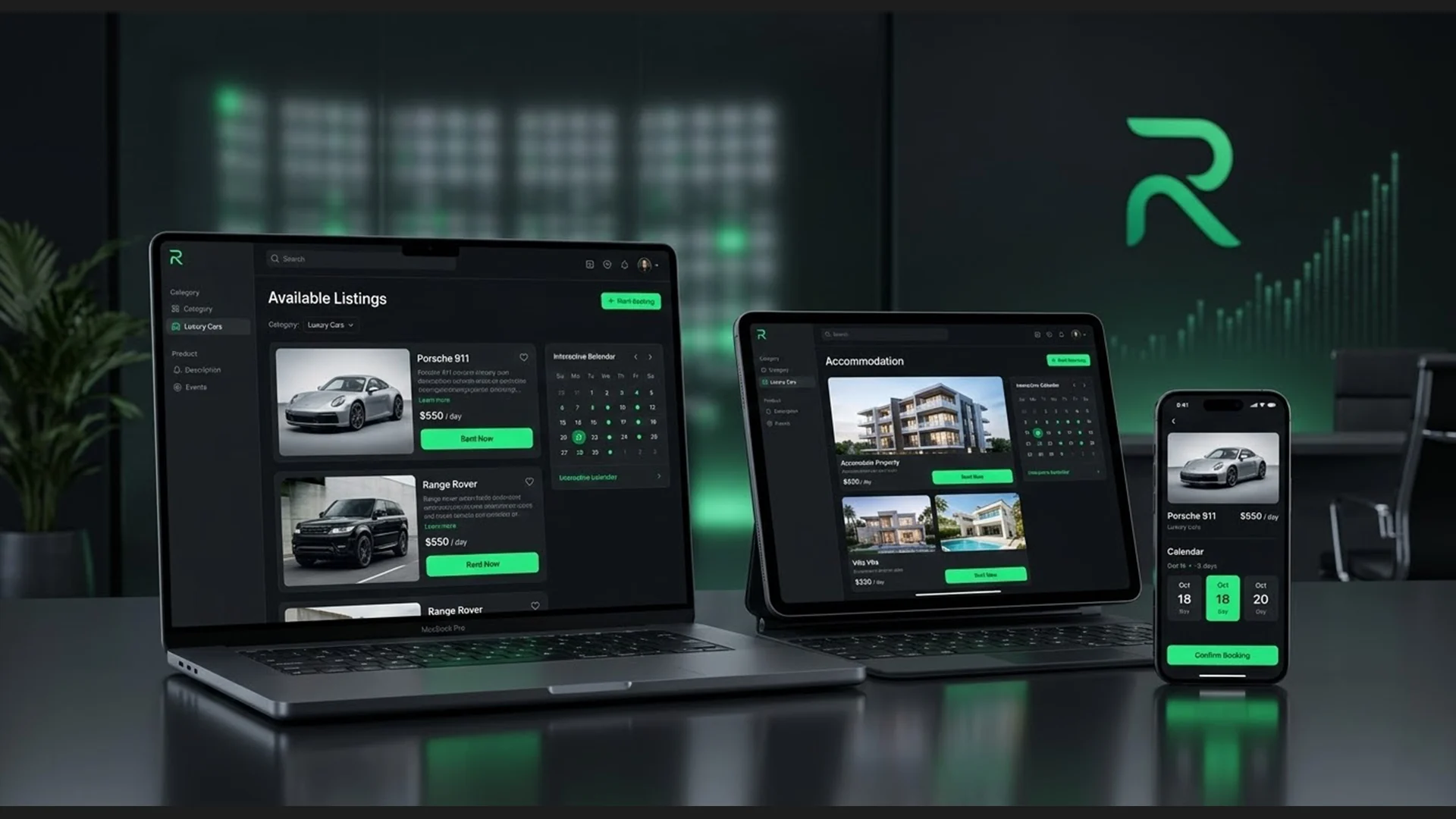
The 2026 Masterclass: How to Build a High-Performance, Scalable Rental Marketplace Website
The global rental economy is witnessing a seismic shift. From traditional car rentals to peer-to-peer (P2P) equipment sharing and vacation stays, the “Access Economy” is predicted to reach hundreds of billions of dollars by the end of the decade.
For entrepreneurs, this represents a goldmine. But here is the catch: in 2026, a basic website with a simple contact form won’t cut it. Customers expect an experience as seamless as Airbnb or Uber. If your platform is slow, confusing, or lacks real-time features, they will abandon their cart in seconds.
As a developer with over 7 years of experience in WordPress, Shopify, and modern JavaScript frameworks like Next.js and React, I have built and audited numerous rental platforms. In this exhaustive guide, we will dissect every technical and strategic layer required to build a rental website that ranks on Page 1 of Google and converts visitors into loyal customers.
Chapter 1: Understanding the Rental Business Model Architecture
Before we touch a single line of code, we must understand the three primary types of rental marketplaces. The architecture of your website depends entirely on which model you choose:
-
B2C (Business-to-Consumer): You own the inventory (e.g., a car rental company or a dress rental boutique) and rent directly to users.
-
P2P (Peer-to-Peer): You provide the platform, and individual owners list their own items for rent (e.g., Airbnb, Turo).
-
B2B (Business-to-Business): Specialized platforms for industrial equipment, medical tools, or office spaces.
Each model requires different permission levels, dashboard complexities, and payment structures.
Chapter 2: The Core Technical Pillars of a Successful Rental Site
1. The Real-Time Booking Engine (The Heart of the System)
The most critical component is the booking calendar. It must be dynamic and reactive.
-
Availability Sync: If an item is booked, it must immediately disappear from the search results for those specific dates.
-
Buffer Times: A professional rental site needs “turnover time.” If someone rents a camera on Monday and returns it Wednesday, you might need Thursday for cleaning and maintenance before the next person can rent it on Friday.
-
Time-Zone Management: Crucial for global vacation rentals to avoid double bookings.
2. Advanced Search & Intelligent Filtering
Rental users are usually looking for something very specific. Your search engine must support:
-
Geo-Location Search: Using Google Maps API or Mapbox to find rentals “Near Me.”
-
Date-Range Filtering: Only showing items available during the user’s specific trip dates.
-
Attribute Filtering: For cars (Automatic vs. Manual), for houses (WiFi, Pool, Pet-friendly).
3. Dynamic Pricing Logic
Rental pricing is rarely a flat fee. Your system must handle:
-
Tiered Pricing: $100/day for short-term, but $70/day if they rent for more than a week.
-
Seasonal Surges: Automatically increasing prices during Christmas or Summer peaks.
-
Security Deposits: Holding a specific amount on the user’s credit card that is released only after the item is returned safely.
Chapter 3: Choosing the Right Tech Stack (The Developer’s Perspective)
Choosing the wrong technology can lead to a website that crashes under heavy traffic or is impossible to scale.
Why I Recommend Next.js & React for Modern Platforms
If you want the absolute best SEO and speed, a Headless approach is the winner.
-
Server-Side Rendering (SSR): This ensures that every rental listing is indexed by Google instantly, giving you a massive SEO advantage.
-
Fast Refresh: No page reloads when a user changes a filter. It feels like a mobile app.
-
Tailwind CSS Integration: For pixel-perfect, modern designs that look premium on any device.
The Power of WordPress & WooCommerce for Rentals
For many businesses, WordPress is still the best choice due to its massive ecosystem. By using a customized WooCommerce setup combined with professional booking plugins, we can create a robust system with:
-
Easy Content Management: You don’t need to be a coder to add new rental items.
-
Elementor/Divi Flexibility: Allowing for stunning visual storytelling.
Chapter 4: UI/UX Secrets for High Conversion Rates
A beautiful design is useless if it doesn’t lead to a booking. Here are the UX principles I follow:
-
Mobile-First Everything: Most renters search on their phones while on the move. Your “Book Now” button must be thumb-accessible.
-
The 3-Click Rule: A user should be able to find a product and reach the checkout page in no more than three clicks.
-
Micro-Interactions: Using GSAP animations to make the site feel alive—subtle hovers on cards, smooth scrolling, and loading skeletons instead of blank white pages.
Chapter 5: Security, Trust, and Payments
In a rental marketplace, you aren’t just selling a product; you are managing a contract between two parties. Trust is everything.
-
Verified User Profiles: Integrating ID verification (like Stripe Identity) to ensure renters are who they say they are.
-
Secure Payment Gateways: Utilizing Stripe, PayPal, or Authorize.net with encrypted 3D Secure technology.
-
Automated Invoicing: Generating professional PDF receipts and rental agreements automatically.
Chapter 6: The SEO Strategy—How to Rank a Rental Website
To get organic traffic, your SEO strategy must be three-dimensional:
-
Local SEO: Optimizing for keywords like “Car rental in [City Name]” or “Rent camera equipment near me.”
-
Long-Tail Content: Writing blogs (like this one!) about “How to choose a rental car” or “Top 10 vacation spots.”
-
Technical SEO: Ensuring your site has a perfect Schema Markup so Google can show your rental prices and star ratings directly in the search results.
Conclusion: Your Journey to a Profitable Rental Platform Starts Here
Building a rental website is a complex undertaking, but it is one of the most rewarding digital assets you can own. It requires a perfect blend of high-end design, flawless coding, and strategic marketing.
Whether you are a startup looking to disrupt a niche or an established business moving online, I can help you architect a solution that stands out. From custom WordPress integrations to high-performance React applications, I bring 7+ years of expertise to ensure your project is a success.

